



The house started out like all the others built in the early 1960s in Delmar, New York, a burgeoning suburb of Albany that, despite its name, was nowhere near the sea. The house was, in fact, an exact replica of its neighbors in the brand new subdivision, each a center entry colonial on a rectangular quarter acre, with dining room to the left, living room to the right, kitchen and family room across the back, and four symmetrical bedrooms upstairs. What differed about the house was the family who bought it—my family.
Most of the neighborhood families had fathers who worked for IBM or General Electric, and mothers who were homemakers. They were regular church-goers, generally Methodist or Lutheran, and their autumn lawn signs signaled that they voted Republican. They had deep roots in the Albany area, with grandparents who would drive over for Sunday dinner from Schenectady or Troy. When these families settled into the new houses in Delmar, they planted yew hedges and forsythia around the foundations, finished the basements, and kept the lawns mowed and the kitchens spotless.
My parents were academics, left wing in their politics and Jewish in their ethnic origins. They had grown up in Brooklyn and pronounced God and guard like they were the same word: gawd. Their own parents had traveled steerage class from Russia to Ellis Island and still spoke the Yiddish of their youth. When my family walked through the door of 121 Westchester Drive, the pristine, newly built house began a slow, steady slide into entropy.
My father spent long hours at the hospital teaching medical students, supervising residents, and writing research grants. When he was at home, he retreated to his study to catch up on medical journals or sneak time with some of his favorite poets and writers—Frost, Dostoevsky, Kafka. He was uncomfortable with the world of inanimate objects and did not know how to build or repair, nor did he believe in paying others to fix things that, in his opinion, were perfectly fine. If a shower leaked until the dining room ceiling below sagged with soft, puffy spots, he would shrug his shoulders and say, “The ceiling hasn’t fallen in yet, has it?” If a towel bar broke off the bathroom wall, he would not replace it, instructing us that “toilet tanks were made to hang towels over.” Proclaiming that he believed in letting nature take its course, he did no yard work and allowed our lawn to grow into a prairie. I once spotted our next-door neighbor, whose weekend mission was to keep his wife’s comma-shaped beds of symmetrically planted flowers weed-free, angrily hacking with an axe at the unruly, invasive honeysuckle vines spreading onto their manicured lawn from our side.
My mother, a professor of English and women’s studies and an early follower of Betty Friedan, thought housework an unnecessary series of chores designed to entrap women. While she sat in the kitchen grading papers or reading novels by the women writers she loved, crusted dishes piled up in the sink, layers of packaged cheese turned green and fetid in the refrigerator, and moths and mealy bugs hatched in the open boxes of rice and pasta in the cabinets. My mother left the house to do things she felt passionate about—volunteering at the Fair Housing Office, raising scholarship money for inner city kids, holding candles on the steps of the Capitol Building in Albany to protest the Vietnam War. Since these activities often kept her too busy to go shopping, she became a firm believer in improvisation. If the milk was sour, then Cheerios tasted just fine with water, and children’s hair could as easily be washed with dish soap as with Johnson’s Baby Shampoo.
My mother lacked any inherent sense of order or categorization, so concepts like “silverware drawer” or “linen closet” were foreign in our house. If I was looking for something—a missing ice skate, for example, or a washcloth—it might be anywhere, hiding in a jumble of unrelated objects that included single socks, toilet paper, and rusty shish kabob skewers. When my mother herself couldn’t find things, she eventually bought replacements which she stashed in new places. Hunting for cinnamon for my oatmeal, I once found fourteen open cinnamon containers in various spots around the kitchen.
As a young child, I accepted the state of that house because I didn’t know anything different. My brothers and I played ping pong in the dark, damp, unfinished basement, using a pot lid for the missing paddle and periodically fishing the one remaining dented ball out of the stinking morass of the overflowing cat litter box. Outside in our yard, we devised games that involved kicking a ball through the high grass around the obstacles presented by prickly brambles and the solidified messes left by the neighbors’ dogs.

When I started school and began to visit friends’ homes, I realized how different my house was from others. Oh, those soft, vacuumed rugs, those clean-smelling piles of folded laundry, those neat flowerpots planted with purple pansies in spring and burnished gold chrysanthemums in fall! I wanted my friends’ houses. I wanted a mom who baked buttercream-frosted layer cakes for the church cake walk and sewed handmade clothes for Barbies that still had heads on them, a mom who would weed out the shoes that didn’t fit me and line the rest up in neat pairs in my closet. I wanted a dad who raked leaves and washed trash cans out with hoses so they didn’t harbor maggots, a dad who would go to the hardware store and return ready to replace a cracked toilet seat or a light bulb that had broken off in its socket.
I honed my passion for organizing in my elementary school library, where I volunteered twice a week during lunch hour. I happily pushed the heavy wooden cart of returned books back and forth down the rows so I could shelve the books according to the delightfully precise order of the Dewey Decimal System. Then I started trying to organize my own bedroom. I folded my laundry and placed it in the dresser drawers by category—socks in one drawer and shirts in another. I alphabetized my books. I lined my stuffed animals up on my pillow: first by color, then by height.
Embarrassed to invite friends over, I began a campaign when I was nine or ten to organize the whole house. I put all the towels together in one upstairs closet—the linen closet!—and threw out open jars of jam and pasta sauce with turquoise fuzz growing on their surfaces. My mother was horrified. “Are you in training to be a housewife?” she asked me. “How did a child of mine get to be so compulsive?”
I begged my father to finish our basement, or at least have our peeling house repainted. “You’re so bourgeois,” he teased me. “Who made the rule that houses have to be repainted?”
During my teenage years I felt increasingly overwhelmed and engulfed by the house. I distinctly remember one winter Sunday afternoon, the darkening sky already turning the unshovelled snow blue-grey by four o’clock. I had searched a long time for an unbroken pencil with which to do my math homework and, having finally found one, was diligently drawing parabolas at the kitchen table. Then I realized that the graph paper—my last piece—was stuck to a smear of peanut butter and jelly. I can’t hand this in, I thought. I won’t. I’d rather get a zero. I experienced myself shrinking, like Alice down the rabbit hole, until I was a tiny doll-like figure dwarfed by the enormity of the cluttered kitchen. I resolved that afternoon to give up chorus and my lunch hour so I could take enough extra classes to graduate a year early from high school.
But escape was not that easy. For as long as my parents owned that house, I never gave up my dogged, one-woman effort to surreptitiously organize it. On college vacations, I came home ready to fold and sort. I could not relax enough to write my midterm papers until there was a semblance of order. Later, when I visited the house with my husband and children, I’d let my parents play with the grandkids while I battled the closets.
Thirteen years ago, when my father’s health began to fail and he could no longer manage the stairs, my parents moved to a retirement community. They sold the decaying house to a tool-savvy young couple for a low price the realtor termed a “handyman special.” Before the sale, my brothers and I arrived to haul the contents of the cabinets and shelves to the Delmar dump in my minivan. As I loaded boxes of chipped dishes mixed with broken toys, open bottles of congealed hand lotion and my ancient training bras onto the dump’s conveyor belt, I fought a final need to sort and categorize the objects. I wondered how many cinnamon containers were hidden in those boxes, grimly but fragrantly heading to their final resting place.
Last month, en route to my forty-fifth high school reunion, I stopped to visit the house. It had been painted a conventional beige since I’d seen it last, the brambly bushes cut down and the lawn mowed. Aside from the tree I had planted on Earth Day in eighth grade—now a tall maple with sweeping branches of crimson leaves—and the yellow fire hydrant that had always been third base for our kickball games, the house looked indistinguishable from the other houses on the street.
At the reunion, my old friends and I traded memories of each other’s homes and families. Story after story confirmed my recollections of that house. One friend remembered my family’s system for incoming groceries—instead of putting them away, my mother just left the bags on the counter and let us rummage through them when we wanted something. Another friend recalled that after playing for hours in the bulldozed piles of dirt near the houses under construction, we were permitted to sit covered with mud at my family’s kitchen table because the kitchen floor was so dirty it didn’t matter.
What I hadn’t anticipated was how positively my friends felt about that house, that family. Their mothers always fussed about rules and order and cleanliness, they told me. When we had sleepovers at my house, no one made us go to bed. We could scream and giggle, wave flashlights around, listen to loud music, and watch anything we wanted on TV till the networks signed off after midnight. We could strew paints and Monopoly money and Coke cans around the living room and burn Jiffy Pop in the kitchen without being scolded for making a mess. My friends felt free in that house.
A woman from my class told me she had always admired the confidence with which I spoke out in class, that I was one of only a few girls in middle school and high school who felt comfortable expressing an opinion. After once coming to my house to work on a group project, she had realized why—I had parents who encouraged sharing ideas. “Your father talked to us about science and politics,” she said. “He asked us what we thought about Nixon and Watergate, and actually listened to us.”
Others agreed, and also remembered how my mother would hand them novels from a pile on the counter as they walked out the door, books their parents would have thought were too racy or challenging for them, books they loved and have never forgotten. “Your house was cool,” they told me.
I left the reunion considering all the good things my parents had imparted to me around the greasy, crumb-strewn kitchen table. Why had I not appreciated all that? Was it a case of a mismatch: a child who thrived on order and conformity born to parents who embraced creative chaos? Was I—and am I still—a boring and conventional soul so overwhelmed by fourteen open containers of cinnamon that I failed to delight in my warmly eccentric upbringing?
My friends, I thought, never had to live in that house. I always knew I was loved and listened to, but I might have felt more secure if I’d known where my shoes were.
I will tell you two last things before I go. One: My elderly mother was the first resident of a swanky senior living community called The Colonnades to harbor rodents in her apartment. We discovered this one December when we opened a cabinet and found that all the Hanukkah candles had been chewed up and the yarmulkes from relatives’ weddings and Bar Mitzvahs had been used as mouse latrines. Two: My own spice rack has one of each spice, neatly arranged in alphabetical order, and any mouse that tries to infiltrate my cabinets would not find a single crumb on which to nibble.

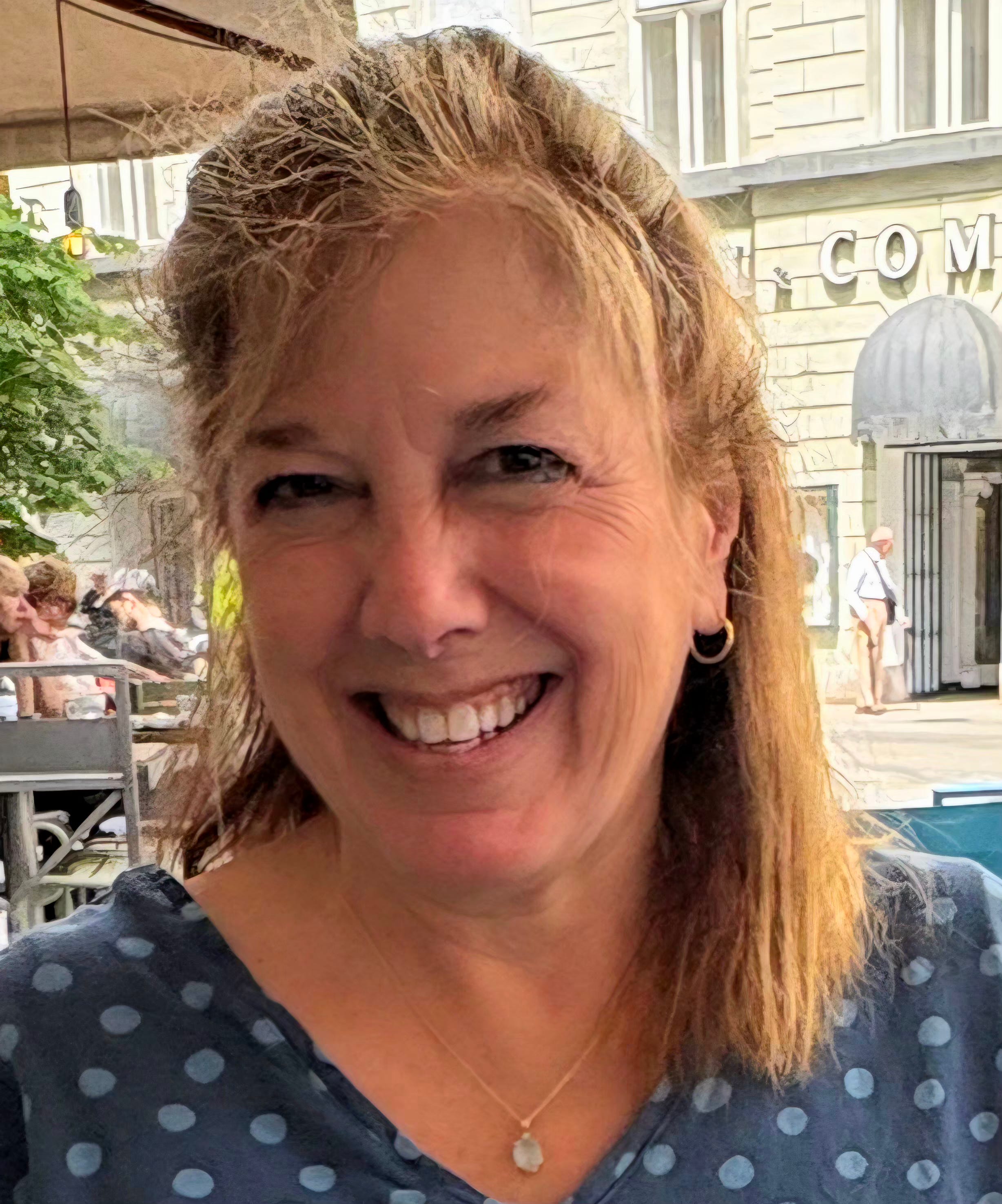
These days I’m mostly reading historical novels. They are a helpful accompaniment to my ongoing work on my first novel, which is set in Ukraine during World War I and the Russian Revolution.
On writing “That House”: “The house I grew up in continues to haunt me. I often dream of the house flooding or burning, while I search through its chaotic rooms for lost shoes, homework, pets, or babies. I first wrote about the house in a memoir workshop. Capturing the remembered disorder in words was cathartic for me. Then I attended a high school reunion and heard my childhood friends recount positive memories of my messy house and unconventional family. This experience helped me to write a more balanced ending and come to a certain degree of peace about the house.”—Andrea Hansell
 | A guest post by
|
Your story reminded me of something from my past. When I was like 15, I brought some friends over to my house. I made disparaging comments about the house and one of my friends said, 'It's a nice yellow house.' ' Yeah I said but it's suppose to be white'[