

I can only assume that the Pollock brothers were counting on the entirety of Bothell to line up single file and cram themselves under our tents. And, to their credit, that was exactly what they did.
On our way to the clearing that Heron Lumber Co. left empty for our use, I saw a shorn tree stump ten feet tall and ten feet in diameter through the window of our truck. The black bark at the rim gave way to the pale meat at the center, alternating shades of concentric circles. It was like nothing I had ever seen in Seattle, where the trees were scraggly and few and the earth had been scraped raw, down to the bone, any natural dip, bend, or curve smothered with poured concrete and brick, an infection that took root and spread up and outward in patchwork hegemony. Smoke from a thousand crooked chimneys hung thickly in the air, melding with petrichor to create a stench of tar that clung to the throat and skin, to buildings and horses and the filth gathered on its streets.
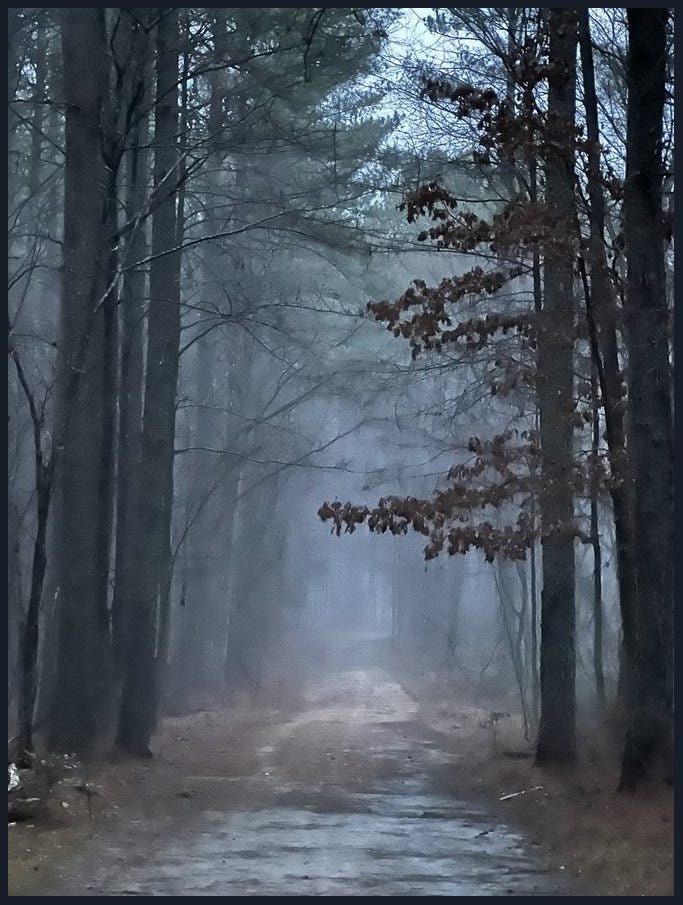
Green and growing things were allowed to start living about twenty miles out of the city, cropping up with tentative breaths bated by the knowledge that their time was limited by the inexorable march of human progress and Heron Lumber’s logging camps. But we followed the rough road and the curving line of the river into a valley where Bothell’s Sammamish Forest sprung up around us in a blink. Dark and loamy, fir and mountain hemlock loomed above us like the coarse legs of giants, reaching heights no building could ever hope to achieve, though both were now under the purview of man.
To the children of Bothell, who grew with sawdust in their lungs and a forest that was cut down by the day, the death of a tree older than they would ever be was cause for neither mourning nor elation—it simply was. They lived in a wild country I would never know, where the scent of dirt outweighed the factory machine smoke, and every man and woman kept a pistol on their person in case of attack by a wolf or bear.
I could have been intimidated, but at thirteen years old I already felt more worldly than any of the children I came across on our circuit. I’d come to realize that when the circus rolled into town, none of that mattered. There might have been bears in their woods, but our bears wore tulle skirts and danced on wires. Our women could tuck their knees behind their heads. Our men breathed fire and bit through iron chains.
I was not the only child on the circuit. Ms. Shelley, who Mama shared the role of ringmaster’s assistant with, was a schoolteacher in another life and threw all twelve of us together under her tent three days a week to learn our letters.
I did take credit for coming up with the idea of charging local kids for tours, kept secret from our parents, of course. The price sometimes varied depending on the neighborhood, but often it was a nickel each for a peek into the dressing rooms, armory, and Reptile Hut. The tiger cages were my most requested tour, but Mama made me swear back and forth on Pápa’s Bible no less than half a dozen times to never go near them, ever. She was of the belief that they would shatter their chains and leap through the bars to gobble me up if they caught so much as a whiff of me.
“You might be all skin and bone, but you’d make a meal far better than what they feed those beasts,” Mama had said, pinching my narrow hips.
I only snuck into the Maneater Tent once after Mama made me promise not to. It was during our Eugene stop in May of 1919. Ostensibly, it was to learn the schedule and movements of the handlers and see if a tour would even be feasible. Not every carnie appreciated my industriousness so I had to be careful of who might spot me.
I was alone that evening, hidden behind crates and rope near the open flap of the tent, as Mr. Donovan, the tigers’ handler, came in for their feeding. It would have made for an easy getaway had Happy Pappy Pollock not parked himself in the middle of the entrance to watch, blocking my path. I curled up on the ground as tightly as I was able, arms wrapped around my knees, and kept silent rather than reveal myself in a hasty escape attempt. Mama had also forbidden me from ever being in a room alone with Pappy, but the click of the lock on the tigers’ cage coming undone froze me to my core.
I looked on in stupefied horror as Mr. Donovan pulled open the bars and stepped through.
The tigers, McKinley and Czolgoz, wore iron collars around their necks with chains bolted to the floor of the cage. Until then I had only seen them from afar, a member of the audience, as they leapt through rings of flame and prowled in circles at the behest of Mr. Donovan’s whip. From less than ten feet away, the tigers looked monstrous, their coarse fur a dizzying array of screaming orange and jagged black stripes like tears in fabric. Larger than any man I had or would ever see, their muscles bunched and shifted beneath their pelt as did the lurching waves of a tempest, both promising violence on the horizon.
Mr. Donovan had a bucket and a scoop from which he tossed McKinley and Czolgoz their dinner, and I recognized trotters and sheep heads, the local butcher’s leavings, in the instant before they descended in a chaotic tangle of limbs, dagger teeth flashing, every one of their guttural yowls making my heart shake and climb further up my throat. It was blood, blood, blood, staining the floor of the cage, their whiskers, their lips that they licked in the same way I licked milk off mine.
Always too loud for his own good, be it funeral or feast, Pappy somehow managed to make his amusement known over the sounds of carnage.
“Hungry beggars, aren’t they?”
For a week straight, I dreamt I was in the tiger cage with a manacle around my ankle, the skin beneath blistered and festering. A tiger big as a pickup approached me from the center of the cage, its steps confident in their slowness. Its ruby eyes never strayed from my face, intelligent as any woman’s, and every night I dreamt it was closer than the last. On the last night it took my throat in its jaws and wrenched, tearing my vocal cords to ribbons, and making it impossible for me to scream.
Locals didn’t stop asking for a peek at the maneaters, but I did get better at turning them down, sometimes sending them off with one of the other kids even if it meant losing claim to their entrance fee. I stopped going to the stands to watch the tiger show and could barely sit through half of the dancing bears before I bolted to the kitchens where Pápa and the other cooks were preparing dinner for the troupe. More often than not, this would mean potato peeling duty until Mama came to collect me. But one afternoon, Pápa was antsy.
Only Washington rain kept him off his bad leg, the cold and miserable wet making the stump redden and ache to the point he couldn’t even fasten his wooden prosthesis. Pápa would hobble around the kitchen, clinging to the backs of chairs and table corners to keep his balance, and amid the monotony I’d focus on the bright red head of the pin keeping his empty left pant leg rolled up. His usual cure for such moods was target practice behind our trailer with the pistol that Mama kept locked in her hope chest next to her favorite bottle of brandy.
That day, he asked if I wanted to see the freak show.
All I knew about the freak show was that it was the embarrassment of the Pollock Bros. Circus. No freak ever hired, from the Worcestershire Bearded Woman to the Little Man from Mars, stayed long enough to make it onto the advertising, always quitting the circuit at the very next stop. Mama kept me far away from that puce pinstriped tent hanging off the side of the big top, an open sore of an attraction only capable of luring the degenerates of every city and podunk we toured.
“Not a word to your mami,” Pápa said as we lingered by the stagehand’s entrance, a clever overlaying of the tent flaps that I wouldn’t have noticed had he not led me to it. He tapped the side of his nose and I grinned, mimicking him.
“Ni una palabra,” I recited, as was our ritual when he let me shoot cans and skip lessons to nap in the pantry.
The freak show was dimly lit; most tents have squares cut into the fabric to form misshapen windows, but these had been covered with cheesecloth dyed green and sunlight cast a sickly pall over everything that could be seen. Without any living freaks, the offerings were strange and few. Divided into two sections courtesy of black velvet curtains that were only slightly moth eaten, we first encountered the preserved oddities.
There were dozens of jars stacked upon teetering bookcases in neat rows, some no larger than my fist and others the size of car tires. All were filled with a solid and opaque substance like gelatin but faintly brown in color that somehow made the pale animal corpses curled up within glow like heavenly bodies by contrast. Each jar was carefully labeled, with the location and date that the specimen expired written just below.
   Three-Eyed Bullfrog

   Exp: Memphis, 1917

   Winged Tomcat

   Exp: New Delhi, 1905

   Conjoined Triplet Calf

   Exp: Toronto, 1916
The preserved specimens didn’t hold either of our interest much, and Pápa seemed eager to move onto the next exhibit: the taxidermy room.
Pedestals were placed helter-skelter without any of the discernible order of the previous exhibit, and there was no uniformity to anything displayed save for the glassy stillness of their faces. The stuffed creatures gave off a musty odor not unlike a wet dog, and without windows to offer the barest breeze, it verged on suffocating. The green sun lent everything a waxen look, catching on the dust motes and flies proliferating the air in flames of copper. Among the many creatures was a two-headed albino cobra poised to strike, a jackalope with its ears perked to danger it would never hear, and even a mermaid, its skin gone sallow and eyes black and sunken from lack of water, curled on its side in the manner it must have died.
“See the stitching?” Pápa pointed to the mermaid’s waist. There was an ugly line of black thread, thicker than the kind Mama used to close holes in my dresses, where the mermaid’s skin met the scales of her tail. “They’ve stuck the shaved body of a monkey onto half of a fish. I think it’s mackerel.”
The mermaid’s skin was leathery and coarse when I poked it. “It’s not a real mermaid?”
Pápa grunted. “Nothing here is real. That’s how they trick you. They stitch different pieces of dead things together to make a new animal.”
A terrible thought struck me. “Your leg isn’t stitched onto a dead thing, is it?”
He laughed. “That’s not a bad idea. Maybe if they paid me for it.” At my dismayed look, Pápa tweaked one of the plaits Mama put in my hair. “My leg was taken by a Federalista bullet, niña. It’s blessed and buried under the Chihuahua City sand, not sitting in a place like this.”
Happy Pappy strolled into the tent as I was studying the Kraken Jr. on display in a tank full of desiccated undersea plant life, its two dozen purple tentacles unfurled like the petals of a flower around the scarred beak at its center. I pointed out the criss-cross thread where the bodies of two squid had been stitched together.
“Do you think they took the beak from a parrot?” I asked.
Pappy, who’d been fiddling with the line of the curtains, glanced up with a smile. “Clever thing, isn’t she?”
Pápa didn’t look away from Pappy as he grabbed me by the shoulder and pulled me against his side. “Yes,” he said. “Very smart.”
Pappy leaned toward me and raised his hand to his mouth as if to whisper.
“Between you and me, I know we don’t have the best selection in here. Pretty bog-standard fakes, huh? But I’m working to bring some real freaks to this freak show, something with bite to really start drawing in crowds. You and your pop can still sneak in for free though.” He winked at me.
Pápa’s jaw creaked as he bit the inside of his cheek, his way of combating his temper before he snapped at important white men. I bristled instinctively. “My wife and I work for your brother,” he said. “We should not have to pay.”
“No, no, course not.” Pappy simpered, tugging sharply on the bottom of his vest. “I can tell you’re working real hard. Hopping around like that must take it out of a fella.”
I had seen Pápa weather all manner of insults against his bad leg with sneers and jeers and silence. But right then, he flinched, and the indignation churning my stomach turned to fury. I might have lunged forward had Pápa’s hand not been white-knuckled around my shoulder.
Happy Pappy, amused and unconcerned, turned to go. Before disappearing behind the tent flap, he glanced back at me with a smile that under the room’s green haze made him appear jaundiced.
“Say, sweetheart, before I forget, we’ve got framed butterflies in that corner over there. Real nice ones too. Big as your face, all the way from South “A”-merica. Give ‘em a gander, huh?”
Pappy sauntered out as casually as he’d entered, and Pápa swore under his breath. His voice shook when he spoke. “Cabrón. Don’t listen to a word that he says. Alfonzo’s the only one with any real power.”
Pápa was right about that. Unfortunately, Pappy was also right about the butterflies.
Perfectly preserved behind glass, they were alien in the same way the tigers were, born in a series of colors I never thought possible in an animal. Veridian and turquoise, jet black and butter yellow, some with whorls in the shape of eyes decorating their delicate wings. Even through the cheesecloth, the sunlight glimmered on the facets with all the colors of the rainbow, and they were so well-preserved that had I wished to, I could have counted the individual lenses on their compound eyes.
The Pollock brothers are preserved in my mind much the same way, stuck exactly the way I last saw them in the spring of 1920. Alfred “Alfonzo” Pollock was our ringmaster, slicked hair black as an ink splotch, short and stout in stature with a twinkle in his eye that spoke to his worldliness in a way that reassured rather than daunted. He chose his stage name to sound exotic enough to lure those hoping for a glimpse at a woman’s bare shoulders but not too exotic for the churchgoers.
“Happy Pappy” Pollock was the older of the two and looked so unlike his brother he could be mistaken for a stranger. His hair was shot through with gray, curling free of any Brilliantine within half an hour of it being applied, and his face held a narrowness that suggested a thinner man in his youth, but his girth outed his bouts with gout. He was a performer, like his brother, but his smiles revealed too many teeth and his laughter burst out of him like staccato gunfire, unexpected and ill-timed. I heard from the stagehands that he was originally in charge of the circus finances, but the entire time I knew him, his only responsibility was procuring exhibits for the freak show.
A week before we arrived in Bothell, during our stop in Sacramento, Happy Pappy received a telegram. He didn’t disclose its contents, but whatever it was, it had him rushing off to find a telephone, and his attempts to stifle a grin only made his glee more apparent. When he returned, he swore a handful of stagehands to secrecy and cloistered them in his tent for the next seven days to paint new advertisements for the freak show. Pappy was by no means a reserved man, but for those seven days, he put on a performance of immodesty that was worthy of Broadway. His attempt to keep us on tenterhooks was snuffed out by our indifference, too cold and tired and preoccupied with the slog of crossing California and into Oregon. Even Alfonzo only had placating smiles to offer his elder brother when he lifted his head from the organization of their expense books.
I’d forgotten about Pappy’s conceit until after the trees of Bothell closed in around us and welcomed us with a fine mist as we set to work waterproofing the tents. The morning of our first show, we woke to find new posters had been erected around the big top and along the long stretch of dirt leading out of the back yard.
The Wolf Girl
Come see the feral child raised by wolves in the wilds of the Washington woods!
She has no language!
Watch her eat raw meat with her bare hands!
Join the Pollock Bros. Circus on a journey back in time and catch a glimpse of prehistoric man!
The wolf girl was depicted with the body of a child clothed in strips of fur and a wolf’s head emerging from a mess of matted black hair. Her eyes were painted the fiery red of lit coals.
“It’s not real,” Mama said matter-of-factly that morning at breakfast.
Pápa nodded over the refritos he was preparing on the Coleman, wooden ladle scraping a familiar litany against the cast-iron skillet. “It never is.”
“Even if it was, he always puts the freaks off within the week,” Mama added. She bustled about in a flurry the same way she did every first day of rehearsal, still clad in her cotton slip and bloomers, though her hair and face were curled and painted to perfection. “What I wouldn’t give to see him actually help Alfonzo run things instead of sitting around pickling dead things all day.”
“Maybe he hired one of the townies and put them in a costume,” I offered. “I’ve seen more of them hanging around than usual.”
Mama rubbed her temples. “Oh, what do you know?” She smiled when Pápa handed her a cup of coffee. “They’ve just never seen anything as interesting as a circus out here in the middle of nowhere. Don’t go anywhere near them.”
“Yes, Mama,” I said, neglecting to mention that I already had two tours slated for tomorrow evening. I sat down at our rickety kitchen table and made a show of tidying my schoolbook and slate. “Can I see the wolf girl after lessons?”
“Absolutely not,” Mama said, disappearing with her coffee behind the curtain that divided her and Pápa’s bed from the rest of the trailer.
I turned to look at Pápa behind the stove.
He smiled and tapped the side of his nose.
* * * *
There was a line to enter the freak show that evening so Pápa and I slipped in through the stagehands’ entrance again. If the wolf girl was worth it, I wondered if I could charge double for my tours. After all, Pappy had raised the regular admission price to forty cents.
Pápa shouldered our way through the crowd, using his crutch to smack the shins of anyone who complained. We heard Pappy before we saw him, his speechifying recognizable from any distance. He brandished a walking stick topped with a pyrite head, the same that Alfonzo wielded in the ring.
“Thanks to the tireless efforts of the Heron Lumber Company and local farmers, gray wolves were long thought eradicated from this part of Washington. But like weeds, where there is one there will soon be many, and our livestock suffers the consequences of their hunger. But it is no longer our cows and our sheep that are being preyed upon—now the wolves are taking our children!”
It was nothing I hadn’t seen Pappy do before; energizing a crowd with a titillating story and using his whole body to provoke a reaction. He raised his voice and threw out his arms and the crowd, no less than thirty of Bothell’s common men with a scattering of wives, jumped back and jeered, as committed to their roles as Happy Pappy was to his.
“The creature I am about to show you was discovered by a local farmer who caught a wolf in one of his traps. He made to shoot the beast when a feral child lunged at him, naked as the day she was born, and tried to gouge out his eyes with her jagged, black nails, sharp as knives! The farmer managed to wrangle the girl, but the wolf escaped in the process. He didn’t realize what he’d caught until the girl started to howl like the devil, calling out for the wolf to save her. She thought herself one of them, kin to mindless murderers and thieves—animals! And as a soulless animal, the wolf abandoned her.
“The farmer kept the girl, tried to civilize her to the best of his ability, but she was not one to be tamed! He suffered bites and scratches, was growled and barked at; she rejected any meal other than raw meat. And then, when he nearly lost a finger to her ceaseless appetite, the farmer telegrammed me and asked if I could take this bundle of joy off his hands. Now, it is an honor to present to you, the viewing public, for the very first time: the Wolf Girl!”
Pápa and I squeezed into a corner of the tent just in time to watch Pappy part the black velvet curtains set around one of the cages we used for our mid-size maneaters. It was set atop a cart to make the interior more visible and indeed it was because as we stared in, the wolf girl stared back. The crowd reeled at her reveal and somewhere among them, a woman screamed.
I was too far to spot any details to support my theory that she was an actor, but she played her part well. Her face was completely human, unlike what her poster led one to believe, and her black hair was matted and filthy around it, obscuring most of her features, though the whites of her eyes caught the glow of the torchlight, making them flicker as if aflame. She had been put in a ragged dress, without socks or shoes, and the hem and sleeves were already filthy from walking on all fours.
When the curtains were pulled back, she retreated into the furthest corner of her cell, pressing against the bars with desperation. She scrabbled against the filthy floor, a tangle of gangly limbs. There was a thick iron padlock sealing her in and Pappy, standing beside the mouth of the cage, made a show of prodding it with his fingers. The wolf girl lunged forward, lips pulled back in a snarl, and Pappy scarcely pulled his fingers back in time to avoid being bitten.
The audience burst into laughter. Some threw Cracker Jack that bounced off the bars of the wolf girl’s cage or the side of her head.
“Whoa, girlie!” Pappy crowed. “Settle down, you’ll get your dinner. Not to worry, folks, this beast has been safely restrained. You are in no danger from her!” From his belt he removed a heavy ring of keys and rattled them together a safe distance from the bars. The wolf girl continued to growl and spit as the crowd began to clap.
Pápa nudged me with his elbow, and I grinned back. I decided that I could definitely charge double for a peek at the wolf girl.
* * * * *
I snuck back into the freak show once operations concluded. The last stragglers had been booted out, and everyone was sitting down to dinner that Pápa helped prepare. Using the stagehands’ entrance, I entered in a crouch so that the specimen tables and shelves would further obscure me. Right away, I knew I wasn’t alone.
Pappy walked in singing a drinking song, and I immediately dropped to my knees, curling up beneath the table of jarred creatures. I could only see his feet as he sang loud and grand and horribly off-key.
Ho! Down with a dram to the roving souls—
Whatever their breed may be—
Whose homes are the ocean’s deep and shoals
To the uttermost edge of the sea
I heard the clink of a glass bottle and a burp. “Nice job, girlie. You made me fifteen dollars today. Keep this up and Alfonzo will have to make me a partner again. Stubborn bastard keeping everything to himself, like it wasn’t my damn idea.”
The wolf girl didn’t respond. All I heard was a strange snuffling sound from somewhere above me.
Pappy chuckled through his nose. “What, you want this? I wouldn’t’ve taken you for a bathtub gin kind of girl.” There was another clink of the glass bottle and the sound of liquid splashing before a sharp animal yelp made me jump, nearly hitting my head on the underside of the table. Pappy burst out laughing. “Guess I was right.”
I recognized the rattle and snarl of an animal attacking the bars of its cage, and a cold feeling of unease began to creep over my skin.
“Whoa,” Pappy said. “Hold your horses, I’ve got your dinner right here.” I heard the slap of something thick and wet fall followed by vicious scrabbling. “Ugh. Better go before I lose my appetite. See you tomorrow, girlie.” Two metallic thuds, as Pappy presumably knocked on the roof of the cage, and the wolf girl—because it could only be the wolf girl—growled.
I listened to Pappy’s footsteps recede and continued to listen until long after he’d gone. My heart pounded in my ears, the only sound in the world other than the wet sounds of chewing and tearing. I hid for so long that my legs began to numb, and only then did I clumsily crawl out from under the table. A single oil lamp remained to illuminate the tent, glowing a dull orange from beside the cage.
The wolf girl was already staring at me.
Blood stained her lips and nose and chin, dripping into the ragged slab of raw meat she clutched between her hands. Through the strands of bloody hair hanging in her face, her eyes alternated between reflecting the orange sheen of the oil lamp and the green glow of animal eyes. Unblinking, she ripped off another piece of meat with her teeth.
I couldn’t tear my eyes away. Frozen in a paroxysm of terror, my throat narrowed and breath went short. It was impossible to imagine how I could have stood in this very space not two hours before and laughed.
The wolf girl lowered the meat, a growl building in the back of her throat like the rumble of thunder. She lunged at the bars, swiping at me with bloody hands, and I threw myself backward into the shelves carrying the preserved specimens. Jars rained down around me, shattering at my feet with an explosive release of rot and formaldehyde. I slapped my hands over my mouth; I didn’t know whether to stop myself from vomiting or screaming, and finally fled the freak show.
Shuddering under my blankets that night, I dreamt again of the tiger approaching me in its cage.
* * * *
I returned to see the wolf girl because I could never leave well enough alone.
Canceling my tours, I waited two nights to gather my nerve and sneak back in during mealtime. Again, I hid. Again, I heard Pappy taunt the wolf girl. Again, I heard her feeding. I trembled as I unfolded my legs and stood to face her, reminding myself fiercely that there was a locked cage between us.
She scarcely paid me a glance before she resumed eating.
I put the sounds of raw meat tearing out of my mind as I stepped closer, clutching fistfuls of my dress to contain my trembling. The wolf girl watched me out of the corner of her eye as I came within three feet of her. That, I felt, was near enough to see her clearly without coming at risk of her grasping hands.
Her skin, what I could see of it, was marred by old, silver scars. One curved wickedly beneath her left eye all the way down to her jaw. I thought it a miracle she hadn’t lost the eye. The bottoms of her feet were blackened and thick calloused, as were the heels of her palms. But there were new wounds, too. Bruises around her throat in the shape of a hand, yellowing with age. A ring of blisters and deep gouges around her left ankle, as if she’d been kept chained.
I swallowed and the wolf girl looked up at the sound. Her eyes were green. I hadn’t noticed before.
“Hello,” I said, haltingly. I’d never had trouble speaking to strangers before but the wolf girl’s unbroken stare pierced through to my ribs in a way that made drawing breath an impossibility.
“Do you . . . um. Do you have a name? Do you speak?”
The wolf girl tilted her head in the same way I had seen dogs do.
I giggled, a strained and stilted sound spasming out of my chest.
I willed the wolf girl to talk and assure me that she was part of an act. I wanted to know how much Pappy was paying her. Instead, she bit into her dinner, blood dribbling down her chin.
At a loss, I sat down in front of her before my knees could start knocking together. The grass pierced through my socks and stung my skin, making me break out in gooseflesh until I tugged my knees up to my chest and wrapped my arms around them. Every other time I had come to the freak show, the swampy heat inside had nearly been unbearable. Now, the chill emanating from the woods crept in under the bottom edge of the tent with searching fingers, searing down my spine in utter disregard of my coat. The cold brought the smell of rain with it, and I knew Pápa’s bad leg would be sore come morning.
The wolf girl finished her meal and began licking her lips and the back of her hands, where the blood and fat had trailed. I dropped my chin on top of my knees and watched her, unable to look away. She looked human. She was human. Yet her every movement and gesture was animal.
Pappy always lied, but I wondered how much of his story had been true.
“You’re real, aren’t you,” I said. There was no one to hear me but the wolf girl and the distant trees, and both kept their silence.
* * * *
It was raining when I visited the wolf girl again.
Business was slow and the troupe trudged through the gloom at the ends of invisible leashes. The cold was of the sort that settled in the bones and spread to the mind, numbing thought and feeling. I knew Mama would be up all evening massaging Pápa’s bad leg, and when I told her I was going to sit around the communal fire pit with my friends, she believed me.
The dyed cheesecloth over the windows of the freak show had little effect on the moonlight, which filtered through pale and yellow. Fat raindrops pattered against the tarpaulin in a symphony I couldn’t comprehend and was too distracted to try. The wolf girl had already been fed by the time I arrived, judging by the scraps of chicken fat littering the grass beneath her cage.
She slept fitfully, curled on her side and shivering beneath the feeble barrier of the dress she wore. I only intended to watch her again, but as she whimpered and kicked in her sleep, her shins smacking against the bars of her cage, I fought the urge to give her my coat. Pappy would discover it, Mama would notice at once, and it wasn’t worth the risk of the wolf girl biting off one of my fingers. I was sorely tempted to give it to her anyway.
The wolf girl stiffened, awakening with a growl, and I startled in turn. She leapt up onto all fours and her eyes snapped open, so wide I could see the perfect circle of white around her irises. Her head roved back and forth searching for something I could not see. Or hear, as it would turn out.
The hairs on the back of my neck stood on end just before a long, piercing note rose into the air over the drone of the rain, weaving a chilling route down the line of my spine. I couldn’t comprehend what I was hearing until the wolf girl echoed the call, tilting her head back and closing her eyes. The wolves’ mournful melody petered into silence after another minute but in my head it lingered and settled over my chest with a palpable weight.
The wolf girl whimpered, hiding her face in her arms and tucking herself into the furthest corner of her cage. I shed a tear in her stead, tracing a frigid line down my cheek.
I slipped out of the freak show and back into our tent, eyes red rimmed and knuckles white from gripping my coat tightly closed. When Pápa saw me shivering he lit the stove and got to frying the blackened, overripe bananas he’d snuck out of the pantry two weeks ago. He sat me down at the kitchen table as their cloying scent flooded my senses, abated by salt and oil, as he danced one-legged to the trumpets on the radio and Mama sipped her nightly glass of brandy, humming along. Louder than the jazz or the sizzle of the pan were the wolves’ cries, warbling and high, continuing to deafen me when no one else could hear it.
I never told them about the wolf girl. Even if Mama believed Pappy was capable of finding a real attraction for the freak show, she would insist it wasn’t our problem to meddle with. If given half the chance, Pápa would’ve freed her just to spite Pappy and gotten us all sacked in the process.
As Mama marched me to Ms. Shelley’s tent for the lessons I’d been dodging, I began to wonder how one might go about freeing the wolf girl. Just idle thoughts at first, to distract me from our recitation of A Midsummer Night’s Dream. The cage would be the biggest obstacle, and I imagined smashing the lock with a rock or shooting it open with Pápa’s gun like in the talkies. I daydreamed of Pappy’s dissolution, the humiliation he would suffer if his lone claim to fame were to vanish in the night. That night I fell asleep smiling despite the howling in my ears.
On the eve of our busiest show in Bothell, I was put to work in the cookhouse with Pápa all day long, and the heat of the stoves had me pink-faced and perspiring by the time Mama collected us after supper. She took one look at me and put an apple in my hands.
“Take a walk to cool down,” she ordered, dropping a kiss on my damp forehead.
I snuck into the freak show for the first time in a week, the air in the tent still foggy with stale tobacco smoke. The grass had long since yellowed, crunching like straw beneath my feet as I approached the wolf girl’s cage. I heard her whimpering before I saw her.
She was a bundle of thin fabric and matted hair quivering against the floor of her cage, her face entirely hidden from view. When she didn’t react to the sound of my footsteps, I whispered, “Hello?”
The wolf girl tore her head up with a snarl, and I jumped back, dropping my half-eaten apple. The left side of her face was painted with her blood, pouring down from a cut over her eyebrow. Pápa always said head wounds bleed more than they need to.
“That looks like it hurts,” I said, reaching out unthinkingly.
She gnashed her teeth, rattling the bars of her cage when I got too close. I hastily backed away, nearly tripping over my apple.
A rustle of tent flaps had us both freezing in place, and my heart dropped into the pit of my stomach at the sound of Pappy’s off-key singing. I fell to the ground and scrambled beneath one of the specimen tables, curling up tight against the tarpaulin wall of the tent. My breathing was loud to my ears, and I clapped a hand over my mouth to muffle it.
Pappy’s last verse was interrupted by a grating cough. I welcomed the sharp swell of satisfaction knowing that the cold weather hadn’t been any kinder to him than it had been to Pápa.
“Have you gotten over your little tantrum?” he asked the wolf girl, his speech slurring. “Hey.”
There was a bang of metal hitting metal, and the wolf girl yelped. When I peered out from under the table, I saw Pappy wielding the pyrite cane he’d stolen from Alfonzo. “You brought it on yourself. ‘The people of the land shall stone him with stones,’ and all that,” he recited. “Maybe next time you won’t try to bite a paying customer.”
Pappy reached into the inner pocket of his coat, struggling to pull something out. After a good deal of tugging he managed to free a pewter flask and nearly knocked himself off his feet in the process. A ring of keys was yanked loose as well. It fell to the brittle grass, though Pappy didn’t seem to notice.
He unscrewed his flask, tucking the cane under his armpit to do so. “No dinner tonight,” Pappy said, taking a swig. “Need to make sure you learned your lesson. Make sure you know I’m the one in charge around here.” More coughing as he stuck the cap back on and stuffed the flask back into his pocket. He ran his hands through his hair in an attempt to bring it to a semblance of order and returned the cane to his hand. A showman’s grin stretched across his face as he stepped out of the tent and into the reach of night.
Pappy left the keys behind.
I crawled out from under my hiding place, unable to tear my eyes away from them. Taking the keys, I knew, would be simplicity itself. It was deciding what to do with them once I had them that terrified me.
The wolf girl cried out.
Her eyes were a brilliant green against the blood drying on her face, like Christmas. She looked back at me, properly looked at me, with fear written across her every line and scar. The wolf girl reached out to me through the bars with hands filthy and nails talon-sharp, human desperation in her animal eyes.
I crouched down and snatched up the keys, dropping them into my dress pocket. Simplicity itself.
“I’ll be back,” I said and hoped the promise was clear in my eyes when I looked back at her. A plan was already forming in my mind, courtesy of my midsummer daydreams.
I returned to our trailer first. Everyone was at dinner, so there was no one to see me unlock Mama’s hope chest and take Pápa’s pistol. He had taught me how to load it, though I’d never shot at anything living that wasn’t a squirrel, and I missed every time. But it felt foolish to free the wolf girl without bringing something to protect myself with. Pappy always lied, but there must have been some truth to the story of how he found her.
I locked Mama’s hope chest and tucked the pistol and the ring of keys beneath my pillow. After that, I went to dinner and told Mama I’d enjoyed my walk.
* * * *
That night, as I listened to Mama and Pápa perform their ablutions, before bed, I wrapped my hand around the cool barrel of the pistol until the warmth of my palm leached into the metal. After an eternity of anywhere between a few minutes and several hours, there was at last silence from my parents’ side of the trailer.
I slid out of bed and into the boots I had left beside it. Moving slowly, I placed the ring of keys into my pocket without letting them clatter against one another. Nights in Bothell were colder than any I’d known yet, so I opted for Pápa’s thickest coat in place of my own. It hung past my knees, but the pockets were so deep I was able to drop the gun in with the pommel only poking out slightly.
A thief in the night, I stole out of our trailer. My footsteps were hushed against the grass and above me, the night was moonless. Against millions of pinprick stars, the treetops surrounded our campsite like a black, rising tide. I carried the oil lamp from our kitchen table to light my way, scarcely making a dent in the darkness. From over the crowns of a dozen tents rose the glow of the communal fire pit, sparks and smoke swallowed by the yawning abyss above us. Men gathered outside in the rare absence of rain, and their distant laughter followed me into the freak show.
Upon my entrance, the wolf girl became overcome with anticipation. She huffed, clutching at the bars, and tried futilely to shake them, growling when she accomplished nothing.
“I’m coming, I’m coming,” I muttered. I put the oil lamp down near her cage and raised the ring of keys up to it, hoping to decipher which went into the lock through sight alone. It was as much an exercise in futility as hers had been. I would have to try them all until I found the one that fit.
The wolf girl watched me intently as I approached her with the keys, her breath going high and fast. Then, the instant I was within reach, she lunged at me.
I ducked back instinctively and one of her nails sliced through my eyebrow in a white-hot flash of pain. Panic propelled me backward until I tripped over my feet and fell onto my backside. The wolf girl watched me from her cage, panting more heavily than I was.
When I raised a hand to my eye, my palm came away with a smear of blood across it.
Above me, the wolf girl whimpered, pawing at the bars of her cage. Her tears mingled with the blood drying on her cheek. Wild, feral she may be, but the fear in her eyes had not abated.
I set Pápa’s gun aside and pulled off his coat, holding it over my head with my left arm as a makeshift barrier. With my other hand, I picked up the ring of keys. I advanced on the wolf girl again but paid no attention to her as she snarled and scratched at me through the bars.
I tried the first key, and she left three long scratches down my forearm. I moved onto the second key. The wolf girl tried to bite my fingers, so I curled my hand into an even tighter fist. I moved onto the third. She dug her nails into the flesh of my palm.
The third key turned in the lock.
I dove out of the way, taking the lock with me. The wolf girl burst out of her cage like a bullet from a gun, scrambling down from the cart and onto the ground. She turned in a circle, as if admiring her newfound freedom, before whirling back around to face me.
The wolf girl looked bigger out of her cage, more of a teenager than a girl, and my grip tightened around the heavy lock, making the wounds on my hand sing. Pápa’s pistol was by the cage where I’d left it, all of my grim preparations reduced to naught. I feared having to bludgeon the wolf girl with the lock if she gave me no other choice.
She stared at me for the span of seven heartbeats before turning around and dashing out through the stagehands’ entrance on all fours.
Though shock briefly staggered me, I snatched up the gun and did not hesitate to give chase. For all of my planning, I had no idea where the wolf girl would go once freed and I was desperate to know. In her pale, filthy dress she moved through our camp like a specter, dashing soundlessly around tents and extinguished fire pits. The line of the Sammamish Forest rose out of the gloom with a darkness far more absolute than mere night could conjure, and it was here that my sprint petered out into a jog and then a walk before I stopped entirely.
I watched the wolf girl race toward the tree line, and out of that absolute darkness, three pairs of green eyes blinked into existence. The wolves had fur as deep black as the woods they emerged from, and they separated from their procession to welcome the girl back with coarse licks to her cheeks, her wounded brow and throat. I jumped when four pairs of green glowing eyes locked onto me, haunting and watchful. I didn’t dare move again, and even taking a breath seemed an insurmountable task.
Once they stared their fill, the wolf girl rose on two legs. She ushered the wolves forward and all of them disappeared into the black of the woods. She followed last. I watched her pale dress flutter to the ground at the line where mankind ended and the forest began.
Howling erupted from the Sammamish Forest, a thousand times louder than what I had heard in the freak show the night before. This was fury and pain and knives in my ears, and I clapped my hands over the sides of my head, desperately stumbling back to our trailer. The entire troupe was awoken, stumbling out of bed and into the frigid night with panic thrumming through the air. Mama and Pápa were standing over my empty bed in horror, the walls of our trailer doing nothing to spare us from the cacophony. Their relief at my return was swiftly overridden by a different kind of horror at the sight of my bloodied face and hands, the stolen pistol poking out of my pocket.
That was our last night with the Pollock Bros. Circus, as it was for many. In the morning, when the woods returned to the silence of their omniscient observance, it would be discovered that Happy Pappy Pollock had vanished sometime in the night. All of significance that was found was the cane he pilfered from his brother, the handle gnawed off and bloody, tangled in the roots on the tree line.

*EDITORS NOTE: “The Wolf Girl” is one of four finalists from The Vincent Brothers Review’s HOUSEKEEPING-themed short story contest. The HOUSEKEEPING-themed contest finalist stories—“Aidan and Isobel,” “Wolf Girl,” “First, You Crack,” and “Knick-Knack,”—will be REPOSTED this week, in the order they first appeared on our Substack. All four stories have also been pinned to our Substack homepage for easy reference.
Voting will end on June 14, 2026, at 11:45 p.m. The places for the Final Four winners will be announced on June 15, 2026, here on The Vincent Brothers Review Weekly Reader on Substack.
Only one vote per reader. Votes are counted, of course, and recent back issues of The Vincent Brothers Review Issues #24 or #25, with TVBR tote bags, will be mailed out to Votes #10, #15, #20, #25, #30, and #100.
Voting form with the contest information is pasted below this paragraph. You’re welcome to send this form to ALL of your readers, family, friends, colleagues, etc.:
https://form.jotform.com/260975640508160
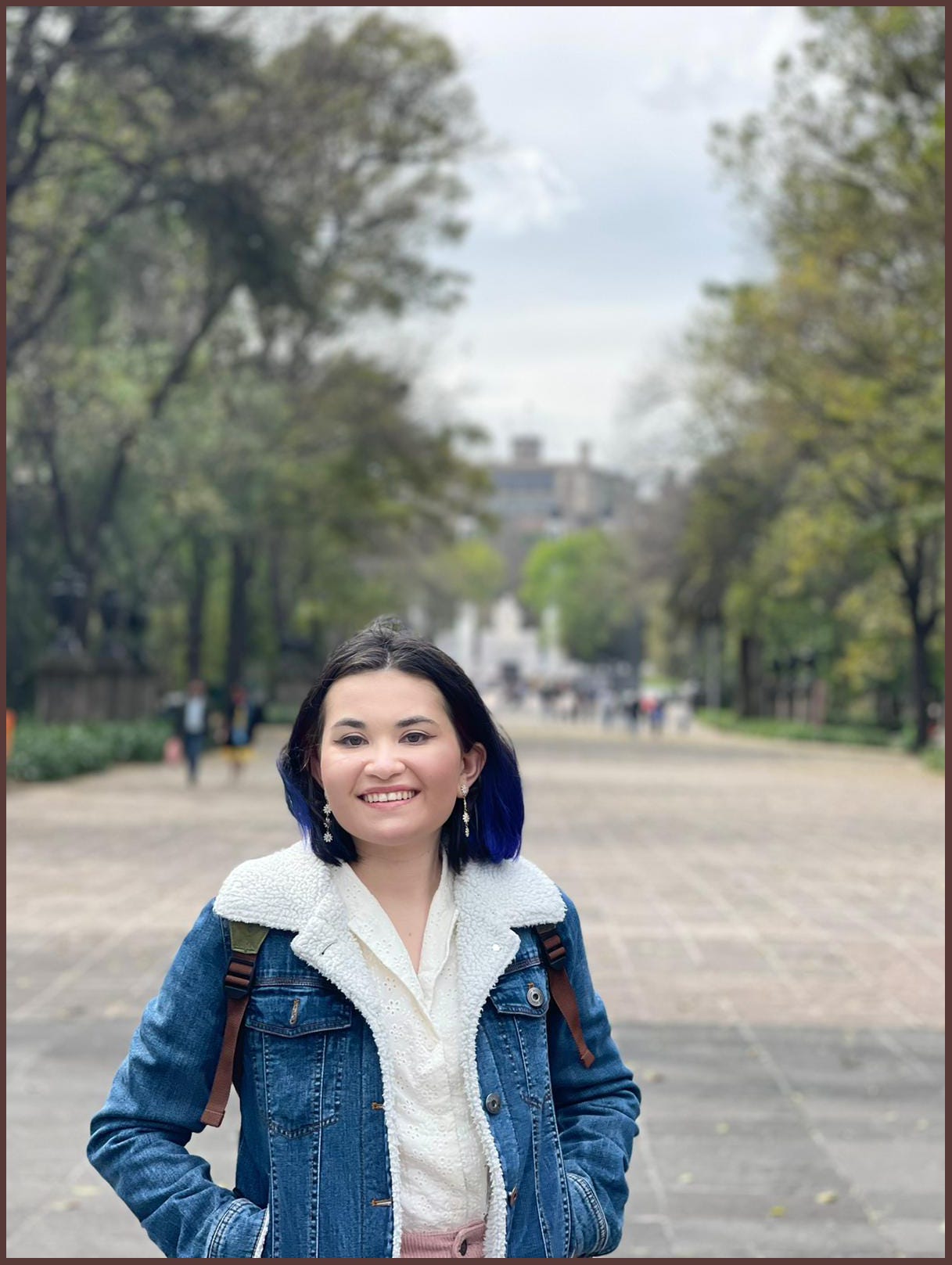
Anna Nicole Torres graduated with an MFA in creative writing from Saint Mary’s College of California. She loves the supernatural, but is too chicken to watch most horror movies. Her other works can be found in Sad Girls Club, Forum Literary Magazine, and The Wire’s Dream Magazine.